
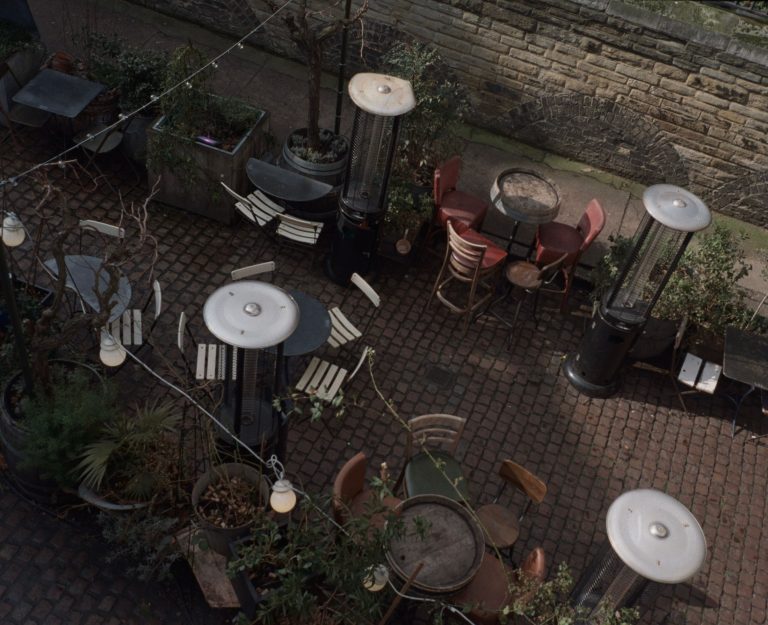
Most outdoor dining areas get their best use in June and July, then sit empty once the air turns cool and the evenings get shorter. A dining space that works beyond summer does not need a large budget or a complete renovation. It needs planning around the conditions you actually get: shoulder-season sun angles, wind, damp ground, early darkness, and the occasional cold night. This guide walks through the decisions that matter most, in the order most people encounter them.
Table of Contents
- Choose a Surface That Handles Weather
- Plan Shade and Shelter
- Add Heat That Matches Your Space
- Layer Lighting for Evening Meals
- Block Wind and Manage Insects
- Set Up Furniture and Layout for Comfort
- Frequently Asked Questions
- Final Thoughts
Choose a Surface That Handles Weather
The ground under your table affects how comfortable the space feels long after the sun goes down. Cold stone, damp soil, and wet timber all draw heat away from the body, which is why a dining area can feel pleasant at 6 p.m. in September and unpleasant by 8 p.m. Before you buy any furniture, look at what you are standing and sitting on.
- Pavers and stone stay firm and attractive, but they hold cold. An outdoor rug helps.
- Timber decking dries quickly after rain, but untreated or poorly sealed wood can warp, split, and grow mold in damp conditions.
- Low-maintenance boards reduce upkeep. For a run of composite decking, check the manufacturer’s installation guidance for spacing and drainage, since moisture trapped beneath boards is a common cause of long-term problems.
Natural wood is not automatically a poor choice. Species with natural decay resistance, such as cedar or redwood, can perform well, but only the heartwood is reliably durable. The USDA Forest Service guidance on preservative-treated wood and alternatives is a useful reference when comparing options, particularly if your dining area sits close to soil or a water source.
Drainage matters just as much as material. Make sure the surface slopes slightly away from the house, and avoid placing a dining table where runoff from a roof valley or downspout will collect after storms.
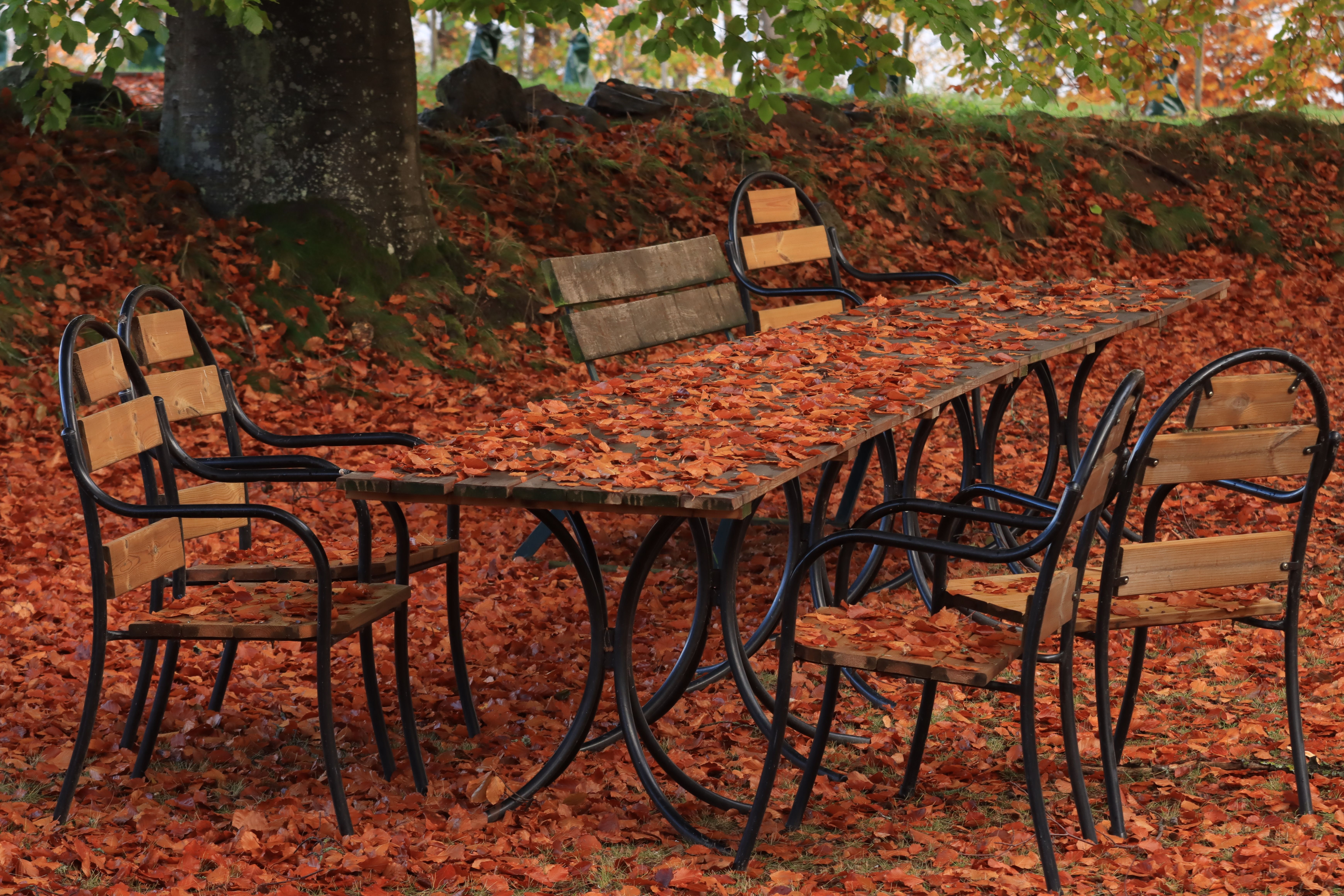
A wooden dining set in autumn: falling leaves and damp surfaces are a reminder to plan for cleaning and drainage.
Plan Shade and Shelter
Shade is often the single biggest factor in whether an outdoor space becomes a regular part of the week. Midday sun in spring and early autumn can still be strong, and a light rain can turn an open table into a reason to go back inside. Shelter options generally fall into three categories:
- Market umbrellas are the least expensive option and provide adjustable midday shade over a table.
- Pergolas with slatted roofs give partial shade and a defined sense of space. Louvered versions let you open or close the slats depending on conditions.
- Covered patios or porch extensions offer the most reliable protection from sun and light rain, and they are the easiest to combine with heating and lighting.
When measuring for shade, think about the sun path at the times you are most likely to eat. A table that is shaded at noon may be in full sun at 5 p.m. in October, when the sun sits lower. Ceiling height also matters: fixed roofs should generally be at least 8 to 9 feet high so that heat and smoke from cooking do not collect uncomfortably at head level.
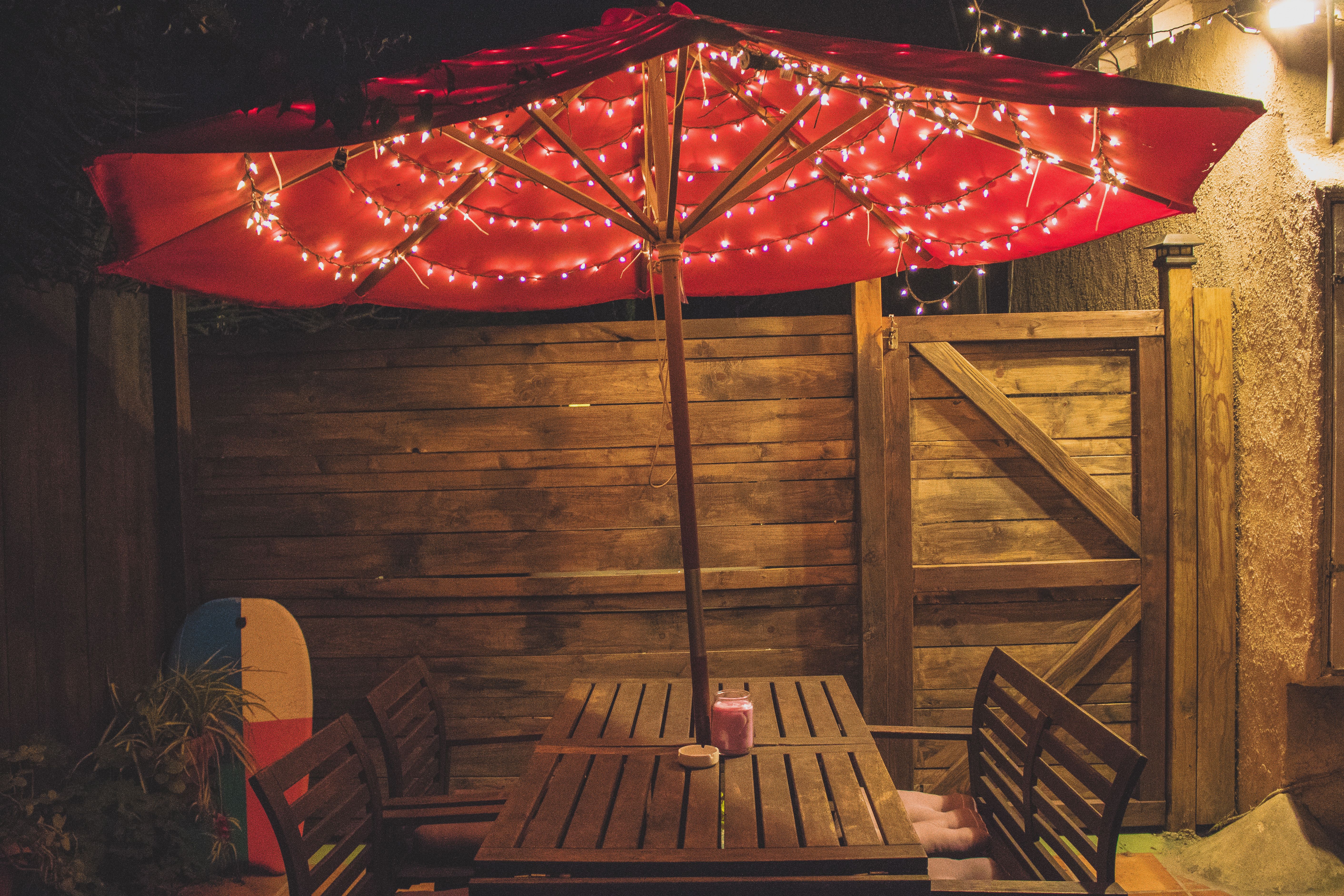
A parasol and string lights create shade in daylight and a warm setting after dark.
Add Heat That Matches Your Space
Heat is what turns a cool evening into a comfortable meal. The right option depends on whether the space is open or covered, whether you have electrical access, and how often you plan to use it. Patio heaters warm people and surfaces directly rather than heating the air, which makes them effective outdoors where warm air quickly disperses.
The main options compare as follows:
Whatever you choose, follow the manufacturer’s clearance requirements from walls, awnings, and overhead structures. Electric infrared units are particularly practical under a pergola, because they can be mounted overhead and take up no floor space. Ceiling fans are a useful companion in covered areas: running them in reverse in cooler months can push warm air down toward the table.
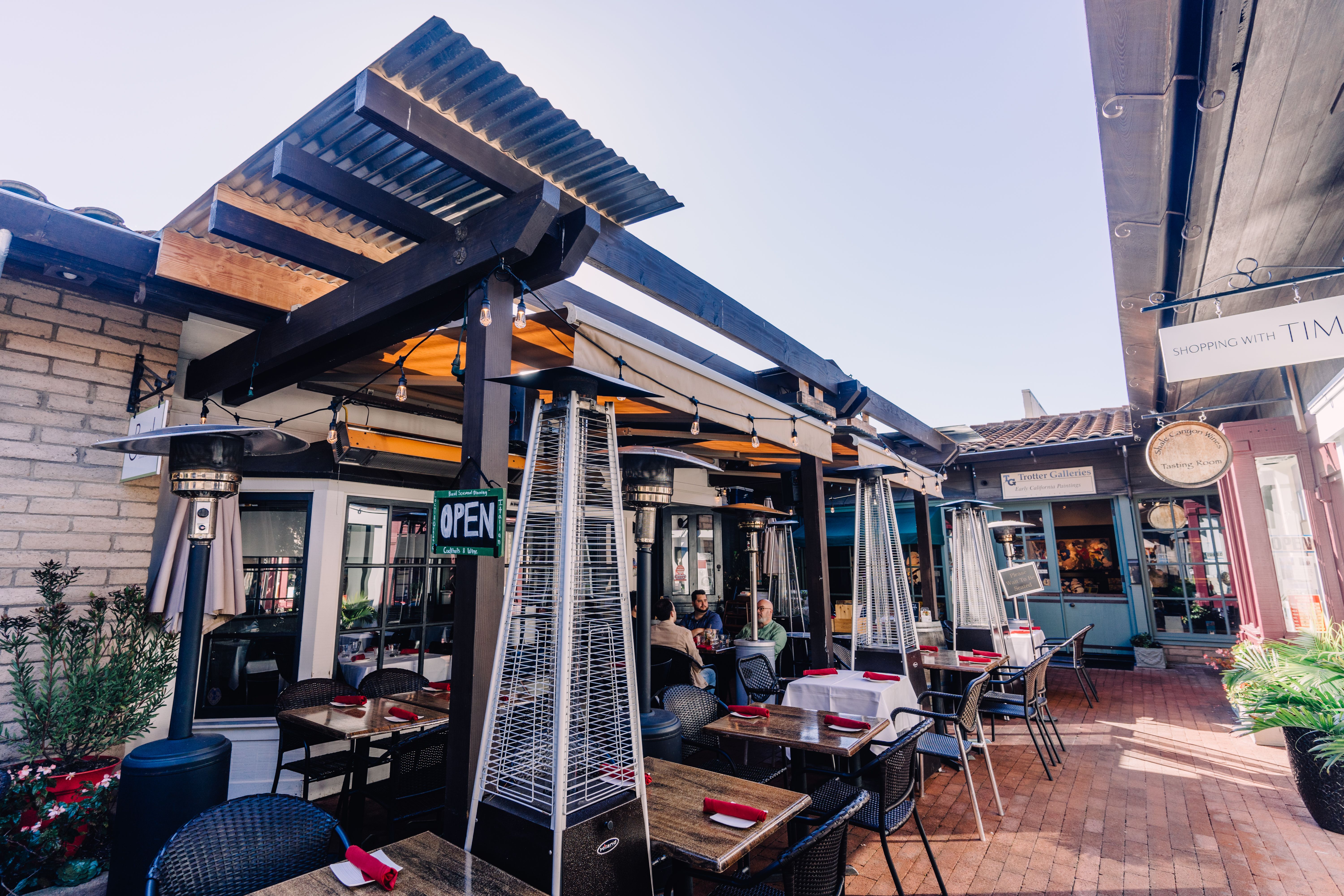
Covered terraces with overhead heaters show how warmth can be concentrated where people sit.
Layer Lighting for Evening Meals
Lighting extends the usable day more than most people expect. A dining area that goes dark at sunset loses hours of potential use, especially on weeknights. Good outdoor lighting usually combines three layers:
- Ambient light sets the overall mood, often through string lights or lantern-style fixtures.
- Task light helps with serving, cleaning up, and reading menus. A dimmable overhead fixture works well for covered spaces.
- Path light makes the route from the door to the table safe and easy to follow, with low-voltage fixtures spaced roughly every 8 to 10 feet along walkways.
Color temperature is worth checking before you buy. Warm white bulbs in the 2700K to 3000K range feel inviting over a meal, while cool or daylight bulbs can make food and faces look harsh. Shielded fixtures also reduce glare, which keeps the space comfortable for people seated facing the light.
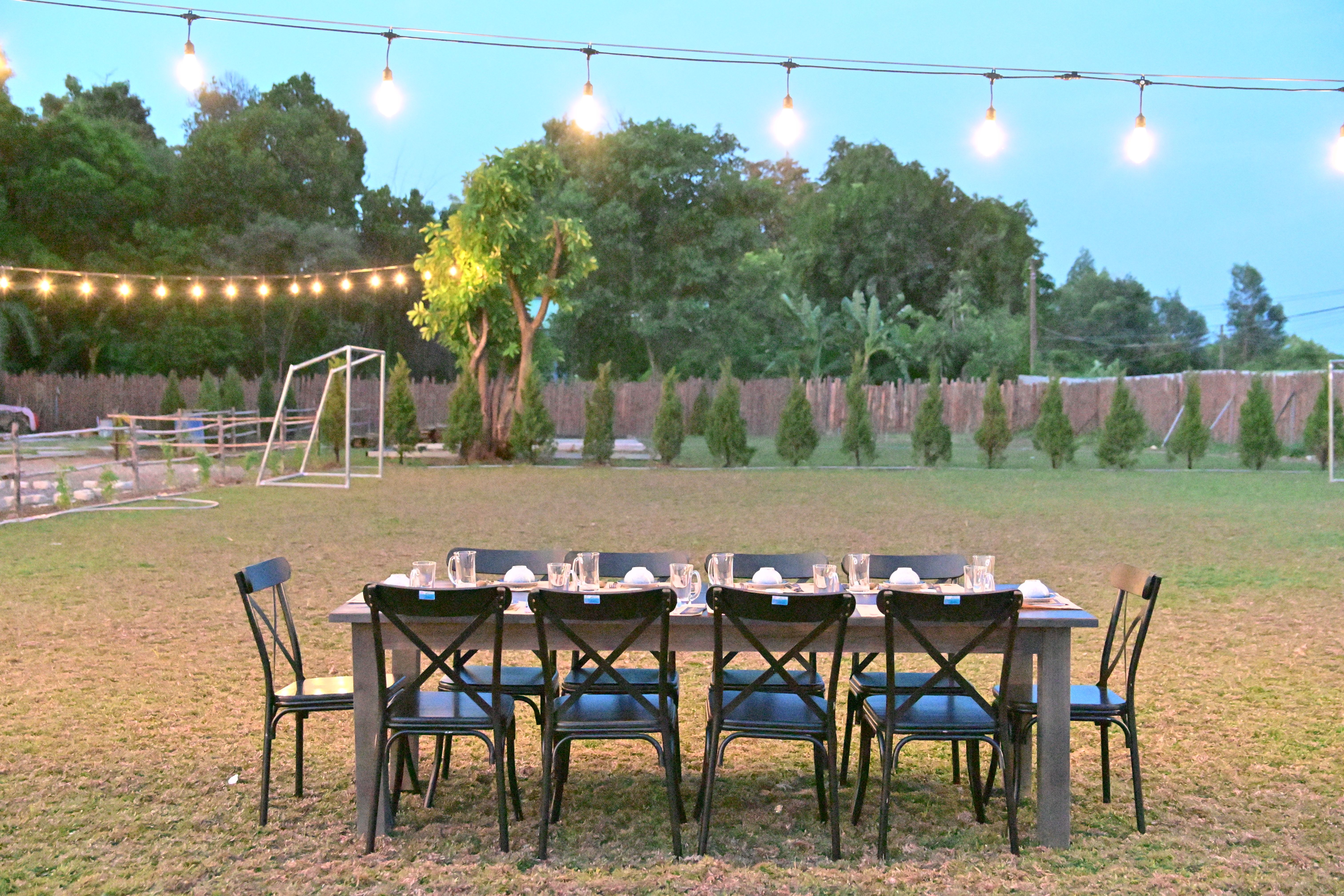
String lights over a dining table provide enough general light for a relaxed evening meal.
Block Wind and Manage Insects
Wind can make an outdoor space feel several degrees colder than it is, scatter napkins, and blow out candles. The most effective windbreaks are usually partial rather than solid. A solid wall can create downdrafts and turbulence on its far side, while a privacy screen or slatted panel slows the wind without stopping airflow. Position the barrier on the side the prevailing wind comes from, and consider:
- Privacy screens or decorative panels of about 4 to 6 feet
- Dense shrubs or evergreen hedges, which take time to mature but look natural
- Weather-resistant outdoor curtains that can be drawn when it gets breezy
Insects are the other common reason dining spaces go unused in the evening. Moving air is one of the simplest deterrents, since mosquitoes struggle to land in a breeze, so a ceiling fan or freestanding fan can help. Citronella candles, plug-in repellent systems, and removing standing water from nearby containers also reduce pressure. In heavily wooded or humid areas, a screened gazebo or porch may be the only option that makes evening dining comfortable most of the season.
Set Up Furniture and Layout for Comfort
Once the surface, shelter, heat, and light are sorted, the layout determines how the space feels in practice. Allow enough room to pull chairs out without bumping into a wall, a planter, or a railing, and keep at least a clear walkway to the door. For a four-person table, a rectangle or round top about 36 to 42 inches wide is comfortable in most yards.
Furniture that can handle the weather without constant attention makes the space easier to use. Look for:
- Powder-coated aluminum or sealed hardwood frames that resist rust and rot
- Cushions with quick-dry fabric, or cushions you can store indoors during long wet spells
- Tables with a sealed or easy-to-clean top, which matter after rain or fallen leaves
Rugs also help. Choose outdoor rugs made from polypropylene or acrylic, since natural fibers absorb moisture and take longer to dry. A rug defines the dining zone, softens hard surfaces, and makes bare feet feel less cold in the shoulder seasons.
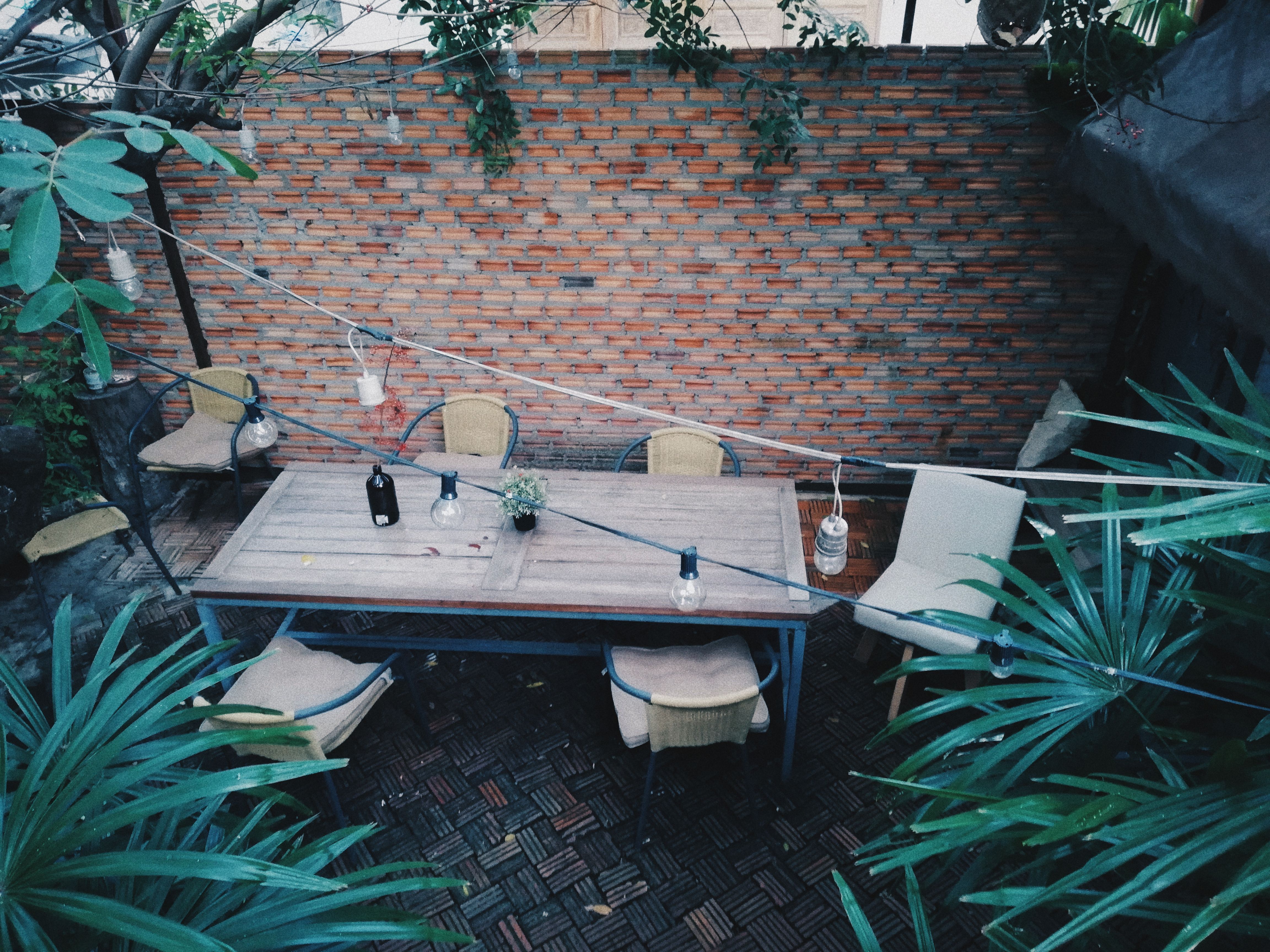
A compact table set against a sheltered wall keeps the dining area defined and protected from wind.
Frequently Asked Questions
Do I need a covered patio to use outdoor dining in cooler months?
Not necessarily. Open areas can work with patio heaters, a windbreak, and warm lighting. A covered area makes heating more efficient and protects against rain, which is why it tends to extend the season the most.
Which is better for a small yard, electric or propane heat?
Electric infrared is a good fit if you have an outlet and a fixed structure to mount on, since it takes up no floor space. Propane is more flexible for open yards, but you will need to store and refill tanks safely.
How do I keep furniture in good condition through the off-season?
Clean cushions and frames before storing them, keep them dry, and cover or move them indoors during long wet or freezing periods. Check fasteners and sealed surfaces once a year and touch up any bare spots.
Final Thoughts
A dining space that works beyond summer comes from a handful of practical decisions rather than any single feature. Start with a surface that drains well and stays comfortable underfoot, add shelter that suits the sun and rain you actually get, and then layer heat and light so the space is usable after dark. Address wind and insects, and keep the layout simple enough to live with. Each improvement extends the season a little further, and together they can turn an occasional summer spot into a place you use most of the year.