
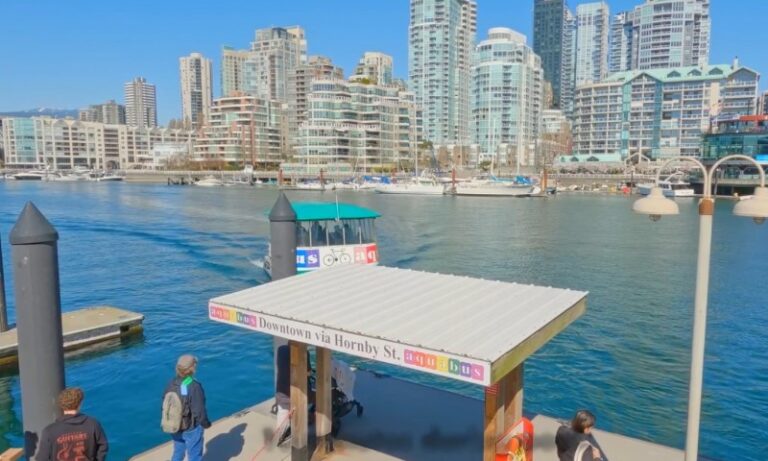
Vancouver makes solo travel feel unusually doable. The downtown peninsula stays compact, transit actually works, and many headline sights sit close enough that a day can unfold without constant planning.
Add ocean air, a serious food scene, and mountains that never leave the background, and the city rewards both careful planners and loose wanderers.
Solo travel still runs smoother with a clear base, a sense of which blocks feel off late at night, and days built around proximity rather than ambition. The guide below works as a street-level playbook, grounded in how the city moves day to day.
What Solo Travelers Need To Know
Vancouver feels walkable inside the downtown peninsula, yet distances stretch fast once beach neighborhoods or the North Shore enter the plan. Public transit covers nearly every visitor route, and a DayPass keeps spending predictable.
Street safety comes down to awareness and route choices after dark rather than fear-based planning. Official reporting from the Vancouver Police Department shows violent crime trending down in 2024 compared with 2023.
Vancouver Safety For Solo Travelers: Real Talk, No Drama
Vancouver operates like a large city with distinct neighborhood personalities. Common-sense habits carry most of the weight.
What The Data Says And How To Use It
Police-reported crime shifts by neighborhood and category, which makes official reporting more useful than online panic. Vancouver Police Department reporting for 2020–2024 lists a violent crime rate of 8.58 in 2023 and 7.98 in 2024.
At the national level, Statistics Canada reported 788 homicides in Canada in 2024, with the national homicide rate declining 4% from 2023 to 2024, moving from 1.99 to 1.91 per 100,000.
Translate those numbers into practical habits:
- Keep phones pocketed when a block feels off
- Avoid empty side streets late at night
- Stick to main routes between neighborhoods after dark
- Trust instincts when a street vibe shifts fast
The Neighborhood That Needs Context: Downtown Eastside
Warnings about the Downtown Eastside surface often. Vancouver’s historic neighborhoods include the DTES, Chinatown, Gastown, Strathcona, and Yaletown, all clustered on the east side of the downtown peninsula.
For visitors, advice stays straightforward:
- Passing nearby during daytime usually causes no issues
- Solo wandering at night serves little purpose
- The 100 block of East Hastings calls for a calm reroute and steady movement
Even mainstream travel platforms flag stretches of the area as uncomfortable for tourists.
Safe, Convenient Neighborhoods To Stay In
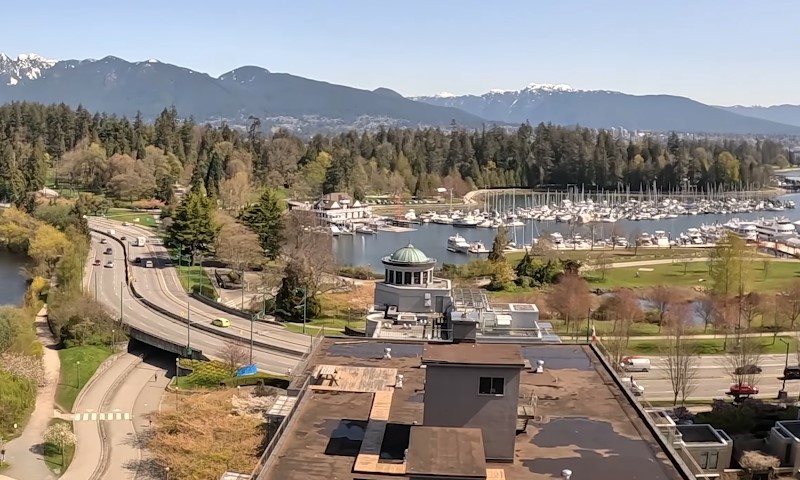
The best solo base balances walkability, transit access, and a calm return at night.
West End
The West End sits between downtown energy and open water. Destination Vancouver describes the area as tree-lined and eclectic, which matches lived experience.
Why it works solo:
- Walkable access to Stanley Park and English Bay
- Residential feel within minutes of downtown
- Ideal for early mornings and evening shoreline walks
Best for first-timers and walk-everywhere travelers.
Yaletown
Yaletown lines False Creek and sits close to major venues. Vancouver’s downtown overview highlights its waterfront setting.
Why it works solo:
- Strong transit connections
- Waterfront paths around False Creek
- Polished dining and modern city feel
Watch-outs include higher lodging and food costs.
Coal Harbour
Coal Harbour offers quieter streets at night while staying close to downtown.
Why it works solo:
- Calm evenings compared with nightlife-heavy blocks
- Direct seawall access
- Close to Stanley Park entrances
Kitsilano
Kitsilano delivers classic beach energy with a local rhythm. Transit replaces walking time into downtown.
Why it works solo:
- Morning beach walks and café culture
- Relaxed pace that suits slow travel
- Easy bus access downtown
Mount Pleasant
Mount Pleasant appeals to travelers who enjoy neighborhood cafés and breweries rather than tourist clusters.
Why it works solo:
- Food-forward streets and strong coffee culture
- Everyday energy rather than visitor bubble
- Transit-friendly exploration
Where To Be Careful With Accommodations
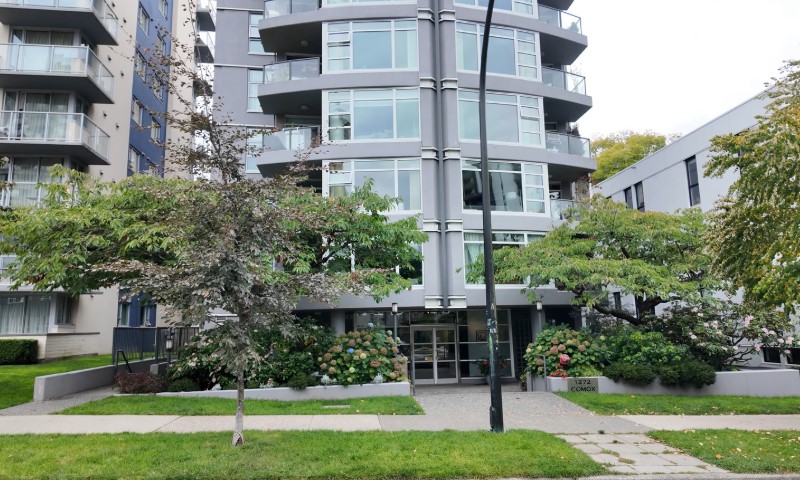
Daytime visits work almost anywhere. Lodging choices affect night returns.
Consider skipping places:
- On the DTES edge with vague listing details
- Near problem blocks around East Hastings
- In isolated industrial pockets requiring long walks from transit
Where To Stay Based On Style And Budget
Comfort in Vancouver depends more on location than luxury.
Booking Strategy For Solo Travelers
Choose one:
- Downtown peninsula base, such as West End, Yaletown, or Coal Harbour
- Beach neighborhood base, such as Kitsilano
- Transit-connected local base, such as Mount Pleasant
A downtown base usually wins for a first solo visit.
The YWCA Hotel neighborhood overview helps visualize clusters like Gastown, Davie Village, Yaletown, Chinatown, Coal Harbour, Granville Island, and the West End, all close enough for efficient daily routes.
Getting Around Vancouver Without Burning Cash
Moving around Vancouver stays affordable once you know when to walk, when to tap transit, and how to use passes and bike share to avoid paying for short, unnecessary rides.
TransLink Basics
Fare zones matter most on the SkyTrain and SeaBus. A DayPass removes guesswork.
TransLink lists the Adult DayPass at $11.95 and the Concession DayPass at $9.40.
The 90-Minute Transfer Mindset
Many trips stack naturally. Granville Island to downtown. Waterfront to North Vancouver. Cluster stops to avoid single-ride spending.
Public Bike Share
Vancouver’s bike share system, Mobi by Rogers, supports short, flexible trips. Pricing lists $1.00 unlock + $0.29 per minute for classic bikes and $1.75 unlock + $0.39 per minute for e-bikes.
Bike share shines along the seawall, around Stanley Park, and through False Creek paths.
Budget Tips That Actually Work
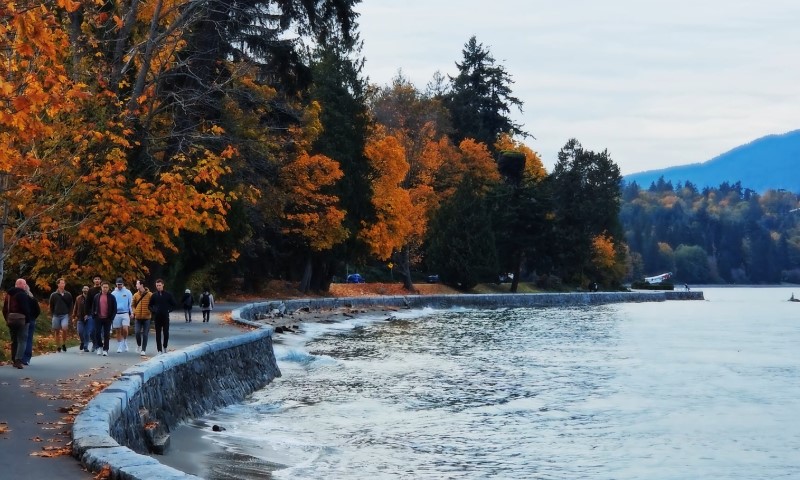
Vancouver costs climb fast around food and lodging. Deliberate choices keep days comfortable.
Build Days Around Free Anchors
Stanley Park serves as the top free anchor. The City of Vancouver notes the 9 km seawall loop takes 2 to 3 hours to walk or about 1 hour to cycle.
Use Granville Island As A Meal Strategy
Granville Island Public Market runs daily from 9 AM to 6 PM. One stop covers food, sightseeing, and atmosphere.
One Paid Attraction Per Day
Costs stack fast. Choose one highlight.
Examples:
- Vancouver Aquarium tickets range from $39.95 to $55.20 plus tax
- Capilano Suspension Bridge Park recommends booking ahead during peak seasons
- Grouse Mountain admission includes gondola access and mountaintop attractions
Swap Capilano For Lynn Canyon
Lynn Canyon Park offers a free suspension bridge experience. The park towers 50 meters or 160 ft over the canyon, with a donation-based Ecology Centre.
Use DayPass On Transit-Heavy Days
Zone-crossing days become predictable with a capped cost.
Best Neighborhoods To Visit Even If You Do Not Stay There
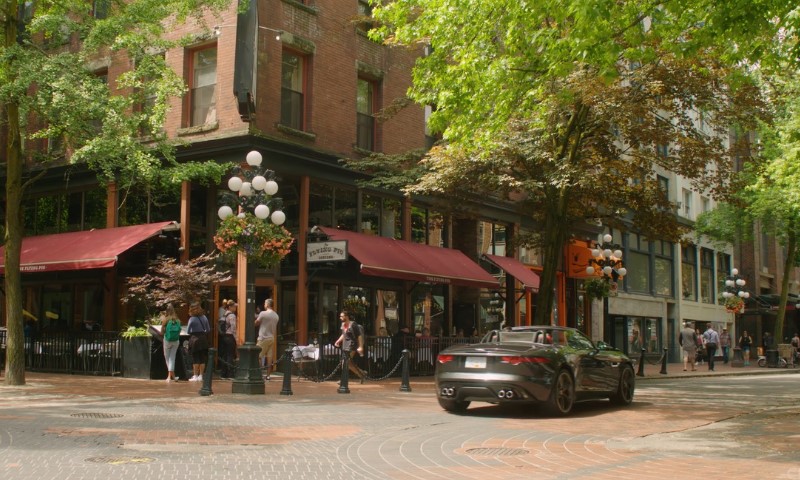
Some Vancouver neighborhoods shine brightest as daytime stops, offering history, food, and character worth exploring without committing to an overnight stay.
Gastown
Gastown carries cobblestone streets and creative energy. Late morning and afternoon visits work best for solo travelers.
Chinatown
Chinatown traces roots to 1885 and earned national historic site status in 2011. Pair visits with nearby areas and plan routes intentionally.
Granville Island
Markets, galleries, and water views create easy solo wandering without rigid plans.
Stanley Park
The seawall resets busy days. Walk, bike, pause at viewpoints, then re-enter the city.
Brockton Point Totem Poles
The City of Vancouver notes the totem poles at Brockton Point rank as BC’s most visited attraction.
Simple 1–3 Day Vancouver Itineraries
The itineraries below group nearby sights and transit-friendly routes so each day feels full, flexible, and easy to manage on your own.
1-Day Itinerary
- Morning: Start near downtown cafés. Walk into Stanley Park and cover part of the seawall loop.
- Midday: Head to Granville Island. Eat at the Public Market and browse waterfront shops.
- Afternoon: Walk False Creek paths or use transit depending on the weather.
- Evening: Catch sunset at English Bay, then dine downtown and stick to the main streets home.
2-Day Itinerary
Day 1 follows the 1-day plan.
Day 2 North Shore. Choose one:
- Capilano Suspension Bridge Park with bridge, treetop walks, and cliffside paths
- Lynn Canyon Park with a free bridge and forest trails
Return downtown for a relaxed dinner.
3-Day Itinerary
- Days 1 and 2 follow the plan above.
- Day 3: Morning at UBC Museum of Anthropology, open Tuesday through Sunday with Thursday late hours.
- Afternoon in Kitsilano or Mount Pleasant. Commit to wandering without overscheduling.
- Evening waterfront walk and simple dinner.
Solo Travel Habits That Make Vancouver Easier
View this post on Instagram
- Keep return routes simple at night
- Pin hotel, nearest SkyTrain, late-night food, and 24-hour pharmacy
- Avoid stacking paid attractions back to back
Neighborhood Cheat Sheet
Vancouver rewards solo travelers who plan lightly and move deliberately. Pick a strong base, cluster days around neighborhoods, and let the city’s parks, water, and food scene fill the gaps naturally.